




Ready to Connect with a Local Lived Experience Peer Support Worker?
Get in touch for an honest, no-pressure chat. We can discuss whatever you need, explore peer matching options across Melbourne, and see if we are the right fit for your journey.

Our approach
We work in a strengths-based and trauma-informed way. In plain terms: We treat you like a normal human being while being aware of what challenges you may face. We do not ask you to retell things you would rather not. Our peer workers are mentored by psychologists and social workers. That structure exists so lived experience is held safely, for the worker as much as for the participant.
We support participants across the north-eastern and eastern suburbs of Melbourne
What a peer support worker actually is
A peer support worker is someone who has lived through mental health challenges themselves and now works alongside others going through something similar.
That is the whole difference. A peer worker has been where you are. They are not reading about recovery from a textbook, and they are not assessing you. They are walking alongside you as someone who understands the territory from the inside.
At Hearts of Gold Support, we hire on lived experience first. Our peer workers are people who have navigated mental health challenges and come out the other side with something worth sharing. Further, at Hearts Of Gold, they are mentored by qualified psychologists and social workers, so lived experience is supported by clinical oversight rather than standing in place of it.

Why lived experience changes the conversation
Most people who come to us have already told their story many times, to many professionals. What they often have not had is a conversation with someone who did not need it explained.
Lived experience shortens that distance. It changes what gets said, how quickly trust forms, and how honest the conversation can be. People tell peer workers things they have not told anyone else, because there is no expertise gap to manage and no sense of being assessed.
It also changes what hope looks like. Being told recovery is possible is one thing. Sitting across from someone for whom it happened is another.
How peer support differs from a standard support worker
Both roles matter, and many participants have both.
A standard disability support worker is generally there to assist with practical tasks: getting to appointments, managing a household, participating in the community. The role is defined by what gets done.
A peer support worker's role is defined by the relationship. The practical support still happens, but it happens alongside someone who has been there. The work is as much about confidence, connection and self-belief as it is about the task in front of you.
In practice most people find the two complement each other rather than compete.
What our peer workers do
- Regular one-to-one support, at home or out in the community, at a rhythm that suits you
- Working alongside you towards the goals in your plan
- Building confidence in daily routines, social settings and community participation
- Navigating services, appointments and systems that are genuinely hard to navigate alone
- Being a consistent presence, which for many people is the part that matters most
But you have heard all this before – what does it actually look like?
- Shopping for you when you are debilitated or having a bad day
- Gentle motivation to work towards your goals, and accompanying you along the way
- Building confidence by encouraging daily routines
- Driving down to your favourite spots to re-ground yourself, or enjoy your participation in society
- Navigating the technology and bureaucracy challenges of modern society
- Helping you fill out paperwork for NDIS or other support services
- Gardening, and helping you enjoy the other activities you love
Frequently asked questions
What is a peer support worker?
A peer support worker is someone with their own lived experience of mental health challenges who supports others going through something similar. The role is built on shared experience rather than clinical training, though at Hearts of Gold our peer workers are mentored by psychologists and social workers.
What is the difference between a peer support worker and a support worker?
A support worker helps with practical tasks. A peer support worker does that too, but brings a lived experience of mental health recovery to the relationship. Many participants have both and find they complement each other.
Can I choose my own NDIS support worker?
Yes. NDIS participants have choice and control over who provides their supports. You can request a particular worker, ask to change workers, and meet someone before committing to ongoing support.
Do I need a diagnosis to access peer support?
You do not need to explain or justify a diagnosis to us. What matters is that your plan includes funding for this kind of support. If you are not sure whether it does, we can talk it through.
How do I get started?
Call us or send an enquiry. We will talk through what you are looking for and whether we are a good fit. There is no cost or obligation to have a first conversation.

Our Lived Experience Workers
Human
We meet you where you are at
Champions agency
Authentic
Empathetic
Lived experience
No judgement
Respectful
Reliability
Active listening
Training
Patience

Literature & Clinical Evidence
Medical research and commentary on the benefits of lived experience mental health support workers
Better Outcomes
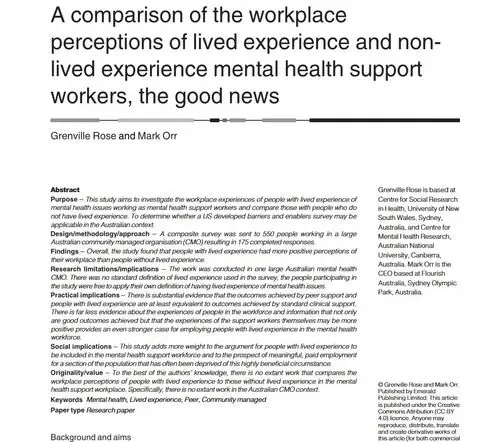
More Reliable & Consistent